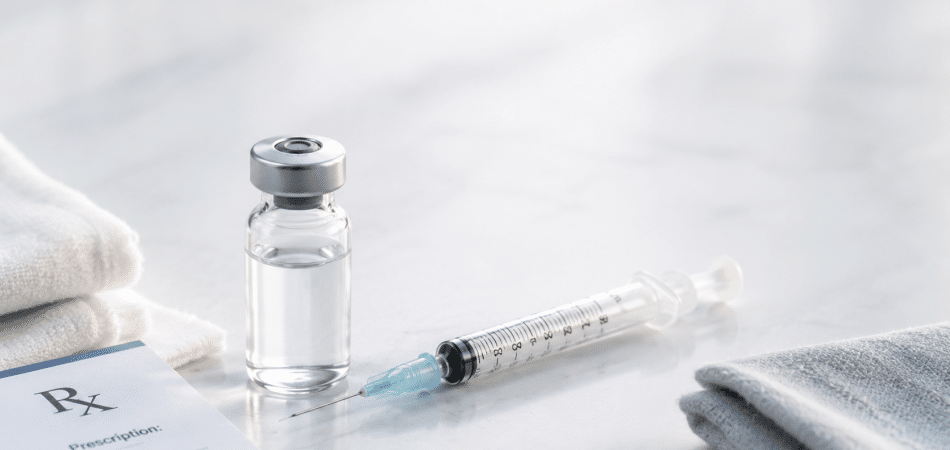
Compounded tirzepatide is a custom-prepared form of tirzepatide, the same dual GLP-1 and GIP active ingredient found in Zepbound and Mounjaro, made by a state-licensed pharmacy for an individual patient. It works by curbing appetite, increasing fullness, and slowing digestion, which lowers how much you eat. It is not FDA-approved, and since the 2024 shortage ended, it is legal only for specific, medically justified prescriptions.
Compounded tirzepatide shows up in every weight-loss forum and ad, usually with a confident claim that it is essentially Zepbound by another name. The reality is more interesting, and a lot more specific, than that.
The medicine itself is real, and the science behind it is solid, but the version you can actually get, and how you can get it, has shifted under your feet over the past year. At Harmonia Health Solutions, we help adults sort the facts from the marketing before they put anything in their bodies.
This guide breaks down what it is, how it works for weight loss, and where it stands legally right now. Contact us today to talk through your options with a licensed provider instead of guessing from a comment section.
Tirzepatide is the active ingredient behind some of the most talked-about weight-loss medications, and “compounded” is the label that confuses people most. Here is the plain version before we get into how it works.
Tirzepatide is a dual GLP-1 and GIP receptor agonist, which is a long way of saying it acts on two of the gut hormones that control hunger and blood sugar. It is the same active ingredient inside the brand-name injections Zepbound and Mounjaro.
The molecule does not change when a pharmacy compounds it. What changes is who makes it and how you get it, and that single fact is the source of most of the confusion. Worth holding onto: the medicine is tirzepatide either way.
A compounded medication is one that a state-licensed compounding pharmacy prepares for an individual patient, rather than a mass-produced product that rolls off a manufacturer’s line.
The compounded version is made to fill a specific prescription, often at a personalized dose. That can mean a strength or form that the brand-name pen does not offer, which is the reason compounding exists in medicine in the first place.
Here is the part that matters most: compounded medications are not reviewed or approved by the FDA for safety, efficacy, or quality. They use the same active ingredient as the branded drug, but they are not the same as Zepbound, and anyone who tells you otherwise is cutting a corner.
Interest in compounded tirzepatide exploded for a simple reason. When the branded injections were in shortage, compounding pharmacies filled the gap and kept people on treatment. Even now that the shortage is over, the convenience and the promise of custom dosing keep the questions coming.
The supply picture has since changed, which we will get to, but the curiosity stuck around. People also ask because a compounded route can allow dosing flexibility that an off-the-shelf pen does not, and if you are weighing it, our compounded tirzepatide program runs entirely through licensed providers who decide whether it is appropriate for you.
The mechanism is the same whether the tirzepatide is branded or compounded, because it is the same molecule doing the work. It leans on three effects that stack together.
 The GLP-1 side of tirzepatide mimics a hormone your gut releases after you eat, signaling to your brain that you are satisfied.
Because the medication stays active across the whole week, that fullness signal holds steady instead of spiking and fading the way it does after a normal meal.
With that signal amplified and constant, the pull toward the next snack quiets down.
Most patients describe it as food noise fading rather than willpower kicking in. Eating less stops feeling like a fight, and that appetite shift is the single biggest driver of the weight change people see.
It also slows gastric emptying, meaning food moves out of your stomach more slowly than usual. You feel full sooner during a meal and stay full longer afterward, so portion sizes tend to shrink on their own.
This is also why the most common side effects are digestive, like nausea or early fullness, especially in the first few weeks. Easing the dose up slowly is how providers keep those side effects manageable.
Here is where tirzepatide separates from semaglutide medications like Wegovy and Ozempic. It adds a second action on the GIP receptor, another incretin hormone involved in how your body handles blood sugar and fat.
Working two receptors instead of one appears to improve both blood-sugar control and appetite. In head-to-head trials of the branded products, the dual approach edged out semaglutide on total weight lost, and that dual-agonist design is the reason tirzepatide gets so much attention.
Tirzepatide is a once-weekly subcutaneous injection, and the dose is not where you start. Providers begin most patients at 2.5 mg per week and step up gradually toward 5, 10, or higher only as tolerance allows. Each step usually holds for about four weeks before any increase, so reaching a maintenance dose tends to take a couple of months rather than days.
The slow ramp gives your gut time to adjust and keeps side effects manageable. You rotate injection sites between the abdomen, thigh, and upper arm to stay comfortable, and a good provider will not offer a shortcut dose that skips the ramp.
The medicine is identical at the molecule level, but almost everything around it differs. This is the cleanest way to see it side by side.
One number gets quoted constantly, so let us put it in context. In Eli Lilly’s SURMOUNT-1 trial, patients on the highest dose of branded tirzepatide lost about 20.9 percent of their body weight over 72 weeks, according to data published in the New England Journal of Medicine.
That figure belongs to the branded product that was actually studied. Compounded versions use the same active ingredient but have no trials of their own, so their results are presumed rather than proven. For the FDA-approved comparison, Zepbound through our practice is the version with that clinical record behind it.
 Compounded tirzepatide is legal right now only under narrow conditions, and that is the honest answer most ads skip.
The FDA declared the tirzepatide shortage resolved in October 2024, then spent 2025 winding down the temporary leeway that had let pharmacies produce copies during the shortage.
Then, in April 2026, the FDA went further and proposed removing tirzepatide from the list of bulk substances that large outsourcing facilities can compound, with a public comment window open through late June.
What survives is a narrow lane for state-licensed pharmacies, which can compound tirzepatide for an individual patient who has a valid prescription and a documented clinical reason, such as an allergy to an inactive ingredient in the branded pen or a dose that is not commercially available.
Wanting to save money, on its own, does not meet that bar, and an “essentially a copy” version of an approved drug is not allowed. That is why a responsible telehealth practice does not hand it out to everyone who asks, and instead, a licensed medical provider reviews your history and decides whether a compounded prescription is genuinely appropriate, knowing it is not FDA-reviewed.
Compounded tirzepatide is the same molecule as Zepbound, working through appetite and slowed digestion, but it lives in a much narrower legal and regulatory space than the branded version. Whether it fits you is a medical decision rather than a shopping one, and it starts with our weight-loss program and a real provider review.
At Harmonia Health Solutions, we match you with licensed providers who weigh the branded and compounded routes against your health and goals, never the other way around. Call us today to talk it through and find the option that actually makes sense for you.
Medical Disclaimer: For informational purposes only. This article does not constitute medical advice. Compounded tirzepatide is not reviewed or approved by the FDA for safety, efficacy, or quality, and a state-licensed pharmacy may prepare it only for an individual patient when a licensed medical provider determines it is medically necessary. Individual results vary. Consult a licensed provider before starting any new medication or weight-loss program.
Compounded tirzepatide is a custom-prepared version of the weight-loss medication tirzepatide, made by a state-licensed pharmacy for an individual patient with a prescription. It contains the same active ingredient as Zepbound and Mounjaro, but it is not FDA-reviewed or approved, and a licensed provider must determine it is medically appropriate.
It works the same way branded tirzepatide does, because it is the same molecule. Tirzepatide activates the GLP-1 and GIP receptors, which curbs appetite, increases fullness, and slows how fast your stomach empties. Those effects together reduce how much you eat, which drives gradual weight loss when paired with diet and activity.
Not exactly. It shares the same active ingredient, tirzepatide, but Zepbound is the FDA-approved, manufacturer-made product backed by clinical trials, while the compounded form is custom-prepared by a pharmacy and is not FDA-reviewed. The medicine is the same, but the manufacturing, oversight, and approval status are not.
Only in narrow cases. After the FDA declared the shortage resolved, broad compounding of tirzepatide ended, and in April 2026 the FDA proposed restricting it further. State-licensed pharmacies may still compound it for an individual patient with a valid prescription and a documented clinical need, and preference or convenience alone does not qualify.
In Eli Lilly’s SURMOUNT-1 trial of branded tirzepatide, adults on the highest dose lost about 20.9 percent of their body weight over 72 weeks. That figure comes from the branded product, since compounded versions have no trials of their own, and individual results always vary with dose, diet, and consistency.
Tirzepatide is a once-weekly injection given under the skin, typically in the abdomen, thigh, or upper arm, with sites rotated each week. Providers start at a low 2.5 mg dose and increase it gradually over several weeks to limit side effects. The slow titration is standard regardless of brand.
Compounded tirzepatide is not FDA-reviewed for safety, efficacy, or quality, so safety depends heavily on the pharmacy and the medical oversight behind it. When prescribed by a licensed provider and filled by a state-licensed pharmacy, the active ingredient and risks mirror the branded drug, but you should never source it without provider supervision.
You start with a virtual visit, where a licensed medical provider reviews your health history, goals, and whether a compounded prescription is appropriate for you. If it is, the prescription is filled by a licensed pharmacy and shipped to you, with follow-up to monitor dosing and side effects.

At Harmonia Health Solutions, your privacy and safety are our top priorities. We comply with HIPAA regulations to ensure that your personal information is protected, and our consultations are conducted by licensed healthcare professionals who adhere to the highest medical standards.
You’ll find information about longevity products and alternative health services, as well as news regarding the most recent holistic health and wellness research.